
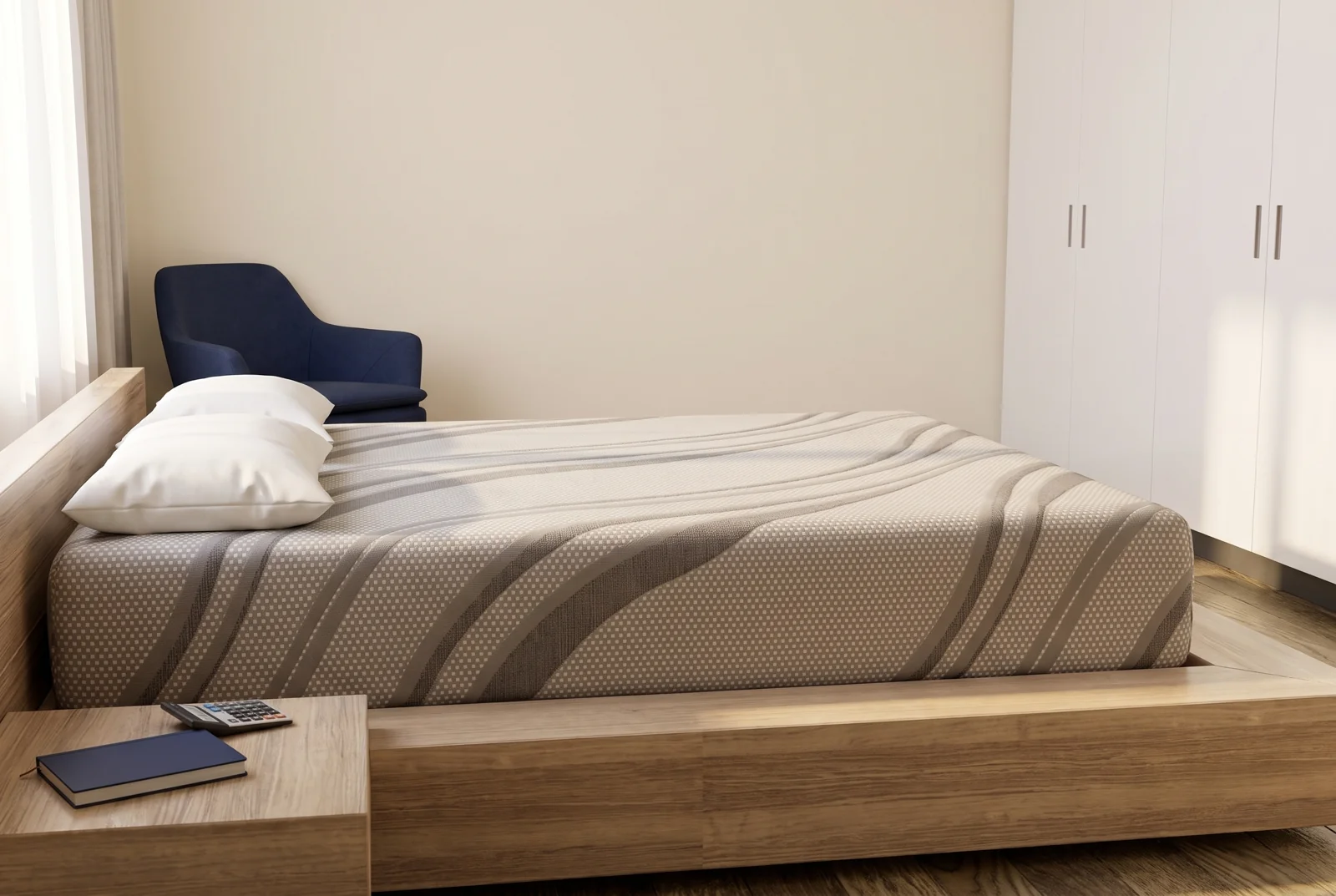
Quick answer: most queen mattresses sell for roughly $800 to $2,000. Entry-level innerspring and memory foam queens start near $600, quality hybrids sit around $1,200 to $1,900, and natural latex typically begins around $2,300. Premium handcrafted and top-tier memory foam beds run $2,500 to $7,000 and up. For an adult buying a mattress to sleep on every night for the next decade, the practical sweet spot is $1,000 to $2,000 for a queen.
Below: what drives the price, real ranges from our current catalog, what you actually get at each tier, and when buying later saves money.
What actually drives mattress price
Six things move the number within any category:
- Coil count and gauge. More pocketed coils, and thicker (lower gauge) wire, cost more and hold support longer.
- Foam density. Higher-density memory foam resists body impressions for years longer than cheap low-density foam. This is the single biggest hidden difference between a $600 bed and a $1,400 one.
- Cooling technology. Phase-change covers, copper or graphite infusions and gel layers each add real cost.
- Cover materials. Synthetic knit, organic cotton, cashmere and silk-blend tops scale steeply in price.
- Construction method. Hand-tufted and two-sided builds cost far more to make than glued single-sided ones.
- Certifications. GOTS organic cotton, GOLS latex, CertiPUR-US foam and Greenguard Gold all add to build cost, and generally to lifespan.
Mattress cost by type
Construction is the biggest single factor. These are real ranges from our current catalog. Each range runs from the smallest size to the largest, so a queen normally lands in the upper middle.
| Type | Typical range (all sizes) | Brands we carry |
|---|---|---|
| Innerspring | About $499 to $1,700 | Eastman House, Diamond |
| Hybrid | About $599 to $3,800 | Helix, Brooklyn Bedding, Spring Air |
| Memory foam | About $1,399 to $10,400 | Tempur-Pedic, Eastman House |
| Natural latex | About $699 to $4,450 | Harvest Green, Birch, Diamond |
| Premium handcrafted | About $1,699 to $7,000 | Chattam & Wells, Stearns & Foster |
Not sure which type suits you? Our sleep quiz asks how you sleep, how you run temperature-wise and whether you have pain or partner-motion issues, then points you at a category.
Mattress cost by size
The same model scales predictably across sizes. Using queen as the reference point:
- Twin: roughly 60 percent of the queen price
- Twin XL: roughly 65 percent
- Full: roughly 85 percent
- Queen: the reference
- King and California King: roughly 125 percent, and closer to 140 percent on premium lines
If you are still deciding on size, our mattress size guide covers dimensions and room fit.
What you get at each price tier
Under $400: proceed carefully
New mattresses this cheap are usually thin single-layer polyfoam, with no meaningful cooling, minimal pressure relief and a warranty that is hard to claim against. They are reasonable for occasional guest use and a poor investment for nightly sleep. If money is tight, a floor model from the clearance rack usually buys more mattress than a new budget bed at the same price.
$500 to $900: entry level
Real, sleepable mattresses start here. In our catalog this covers beds like the Eastman House Spruce innerspring (about $499 to $999 across sizes), the Diamond Rock extra firm innerspring (about $719 to $1,039), the Brooklyn Bedding CopperFlex hybrid (about $599 to $1,099) and the Harvest Green Essential organic latex hybrid (about $699 to $1,399). Expect five to seven years of useful life, basic cooling, and a usable ten-year warranty. Good for solo sleepers, guest rooms and first apartments.
$900 to $2,000: the sweet spot
This is where most adults should be shopping for a primary bed. Pocketed coils, higher-density foams, genuine motion isolation and cooling that works in a warm room. Our catalog here includes the Helix Midnight and Twilight hybrids (about $749 to $1,863), Helix Luxe (about $1,119 to $2,810), the Spring Air Back Supporter hybrids (about $879 to $1,899), Birch natural latex hybrids (from about $962), the Eastman House Royal Sands gel memory foam (about $1,399 to $2,299) and the Tempur-Pedic TEMPUR-Adapt (from about $1,599). Expect eight to ten years and a ten to twenty year warranty.
$2,000 and up: premium and luxury
Hand-tufted construction, advanced cooling, and pressure relief that genuinely helps with back, hip and shoulder pain. This covers Stearns & Foster Studio and Estate (about $1,699 to $3,199), Chattam & Wells (from about $1,999 up to roughly $7,000 on the Kensington), Diamond Lucille and Diana natural latex (about $2,299 to $4,449), and the Tempur-Pedic ProAdapt, LuxeAdapt and LuxeBreeze lines (about $2,899 to $10,398). Expect twelve to fifteen years with proper support underneath, and often an adjustable base paired with it.
When mattresses go on sale
The industry runs a predictable promotional calendar, and waiting for the right weekend genuinely saves hundreds.
- Memorial Day, late May. One of the two deepest discount events of the year, often bundled with adjustable base offers.
- Labor Day, early September. The model-year changeover, when brands clear outgoing inventory. The best window for getting a premium bed at mid-tier money.
- Black Friday through Cyber Monday, late November. The steepest headline percentages, but popular sizes sell out quickly.
Presidents Day and the Fourth of July are smaller but real. You can always check what is currently discounted on our sale page.
How financing changes the math
Spreading a mattress over monthly payments is the difference between buying the right bed and settling for a cheaper one you replace sooner. We offer financing options, including zero percent plans for qualifying applicants, and you can apply online or in any showroom. Terms and current offers are on our financing page, and our guide to how mattress financing works explains what to watch for.
Costs people forget to budget for
- A supporting base. A foundation or box spring runs roughly $160 to $500 depending on brand and size, and most warranties require proper support.
- California's mattress recycling fee, a small state-mandated charge on every mattress and foundation sold. Details on our recycling fee page.
- Protection. A decent mattress protector is inexpensive insurance, and a stain is the most common reason a warranty claim gets denied.
- Delivery and haul-away. Ours is covered on qualifying orders; see delivery details.
Frequently asked questions
How much does a good mattress cost?
For a queen that will last eight to ten years, budget $1,000 to $2,000. That range buys pocketed coils or high-density foam, real cooling and a warranty with meaningful sagging coverage. Spending less is reasonable for a guest room or a child, and spending more buys longevity and luxury materials rather than fundamentally better support.
Is $1,000 enough for a queen mattress?
Yes. At that price you are shopping quality hybrids and entry natural latex, both of which will comfortably last the better part of a decade. You will not get hand-tufted luxury or the most advanced cooling systems, but you will get premium coils, decent foams and a real warranty.
How much is a mattress at the cheapest that is still worth buying?
Around $500 to $700 for a queen is the realistic floor for a bed you will sleep on nightly. Below that, lifespan drops to a few years and the comfort layers compress quickly. A clearance floor model is usually the better way to spend a tight budget.
What is the price difference between memory foam and hybrid?
At comparable quality, hybrids tend to cost several hundred dollars more than basic memory foam because of the pocketed coil unit, though premium memory foam from a brand like Tempur-Pedic costs far more than most hybrids. You are paying for airflow, edge support and resistance to sagging.
How much should I spend if I sleep on my side?
Side sleepers need pressure relief at the shoulder and hip, which means thicker comfort layers. Budget $1,000 to $2,000 for a queen. Going cheap is a false economy here specifically, because thin comfort layers compress to firm within a couple of years and the shoulder pain returns.
Are mattresses cheaper on holiday weekends?
Yes, meaningfully. Memorial Day, Labor Day and Black Friday are the three deepest discount windows, and if your timing is flexible, waiting for one of them is the single easiest way to save money on the same bed.
How long does a $1,000 mattress last?
Typically eight to ten years for an adult of average weight who rotates it a few times a year and keeps it on a proper foundation. Heavier sleepers and unsupported bases shorten that. Cheaper beds run four to six years, and premium ones twelve to fifteen.
The bottom line
For a primary bed you intend to keep for a decade, $1,000 to $2,000 for a queen is the right target. Below it you are trading away longevity; above it you are buying craftsmanship and comfort features that are genuinely nice but not strictly necessary.
The fastest path is to take our sleep quiz for a category recommendation, then lie on your top two or three picks for at least five minutes each at one of our five Los Angeles showrooms. Same-day delivery is available across most of LA, and our free 120-night comfort guarantee means a wrong guess is not permanent.